Barista quality coffee: a step-by-step guide
- Milk Pitcher
- Dosing/Measuring Cup
- Shaker
- 3x cleaning towel (1 steam, 1 machine, 1 portafilter)
- Tamper
- Scale
- Cleaning brush
- Shots timer
- Disposal container for coffee grounds
- On demand grinder
- Espresso machine

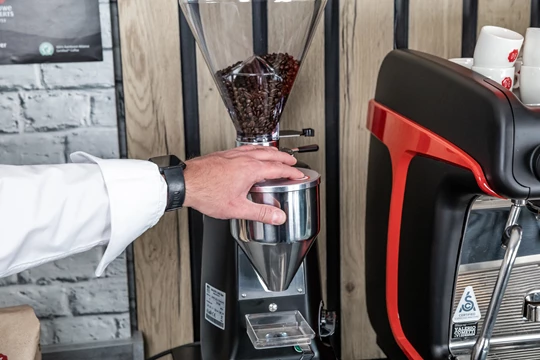
Grind
Dose
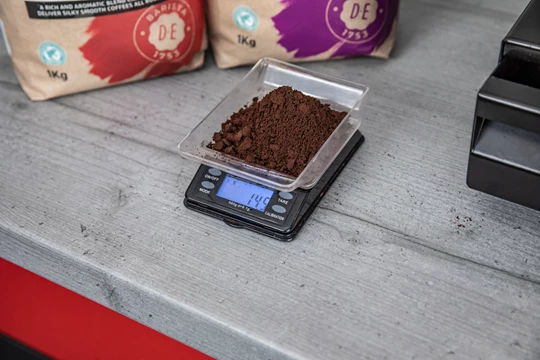
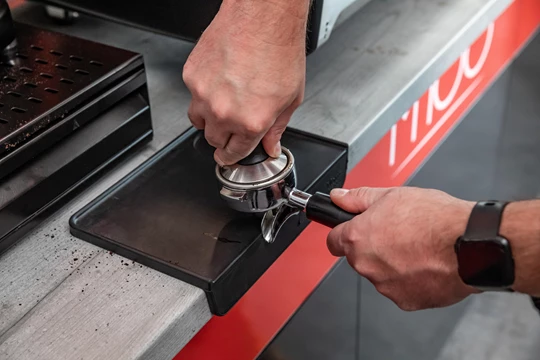
Tamp
Brew
Water pressure should be: 8,0 – 9,5 bars
Position the cups under the spout and press the correct button (single or double)
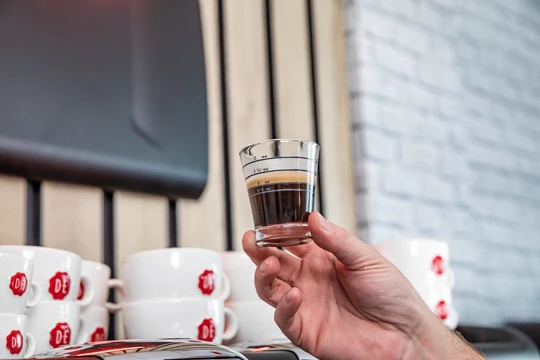
Extract for between 22-28 seconds for a 35ml Espresso.
Examine the espresso, the crema should be 3-4mm and a thick, golden, hazelnut colour. Look for flecks of light and dark which some barista’s call “the tiger skin”. If there is no crema, it’s not an espresso!
Top tip:
If it comes out sloppy and wet, this may be an indication you have not dosed enough coffee, tamped too softly or the grind is too coarse.
If the cake is too hard and leaves an oily residue in the basket or has white sections on the surface the dose was too high, tamping was applied too firmly or the grind is too fine.
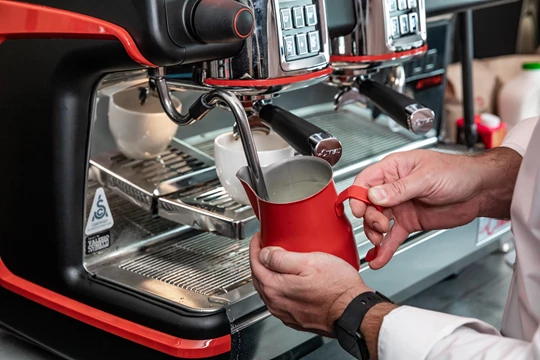
Milk
How to froth the milk:
- Take a pitcher and fill it with milk
- Open the steam wand on the espresso machine to release water, use a cloth.
- Dip the tip of the steam wand in the milk and open the steam wand, whilst you hear a soft sound the milk will start to swell. It will begin to froth and rise level (this is the stretch phase)
- When you’ve created enough froth, move your pitcher a little up so the steam wand is under the milk surface continually steaming. This is your heating phase but remember the milk temperature shouldn’t be above 70°C
- Different milks have different heat settings – soy milk, for example, should not be heated as hot as cow’s milk!
- Purge & clean the steam wand before pouring the milk, tap out the bubbles and spin the milk!
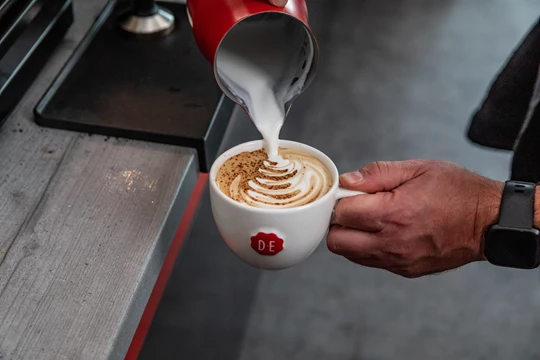
Pour
Related articles
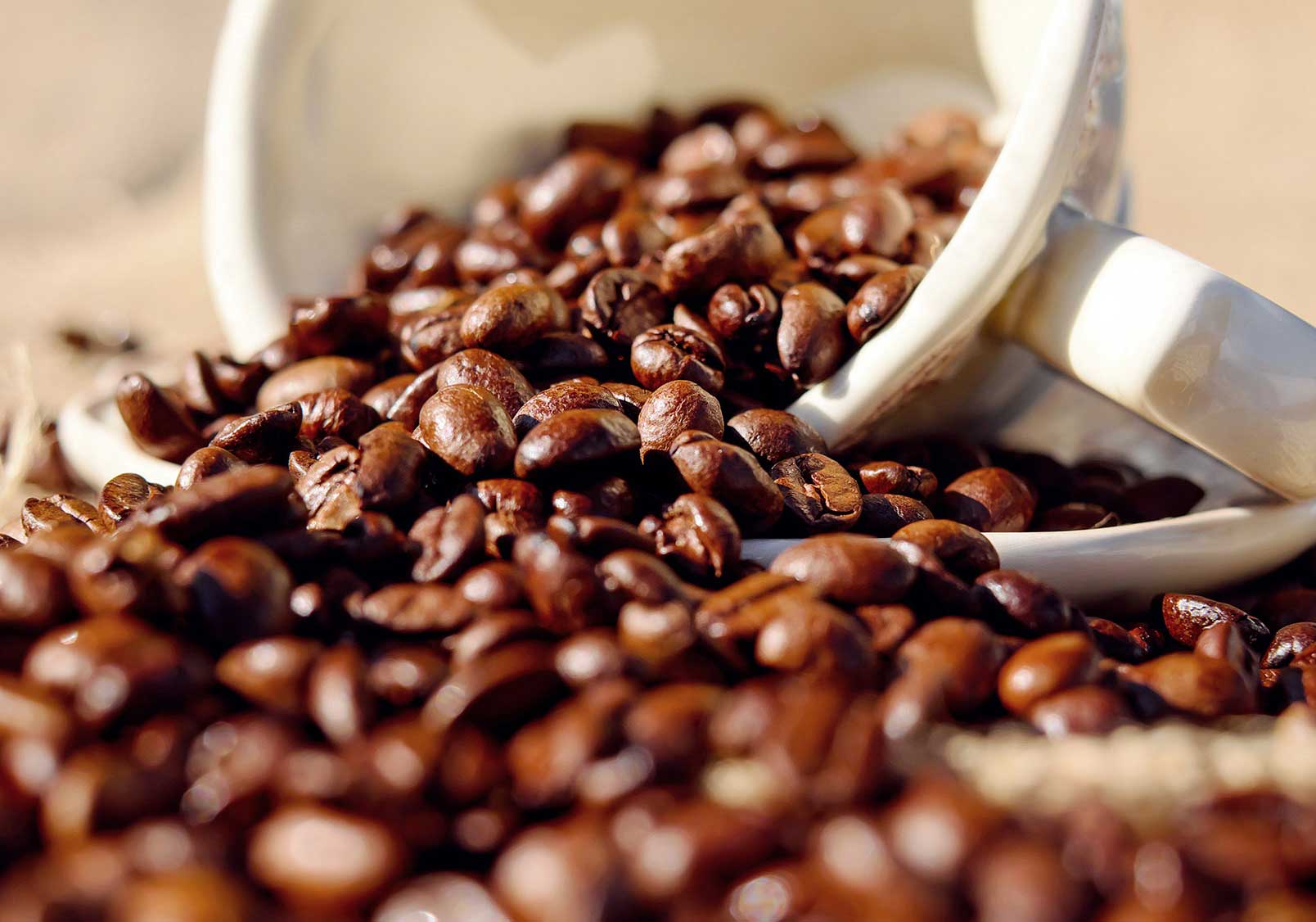
What is coffee?
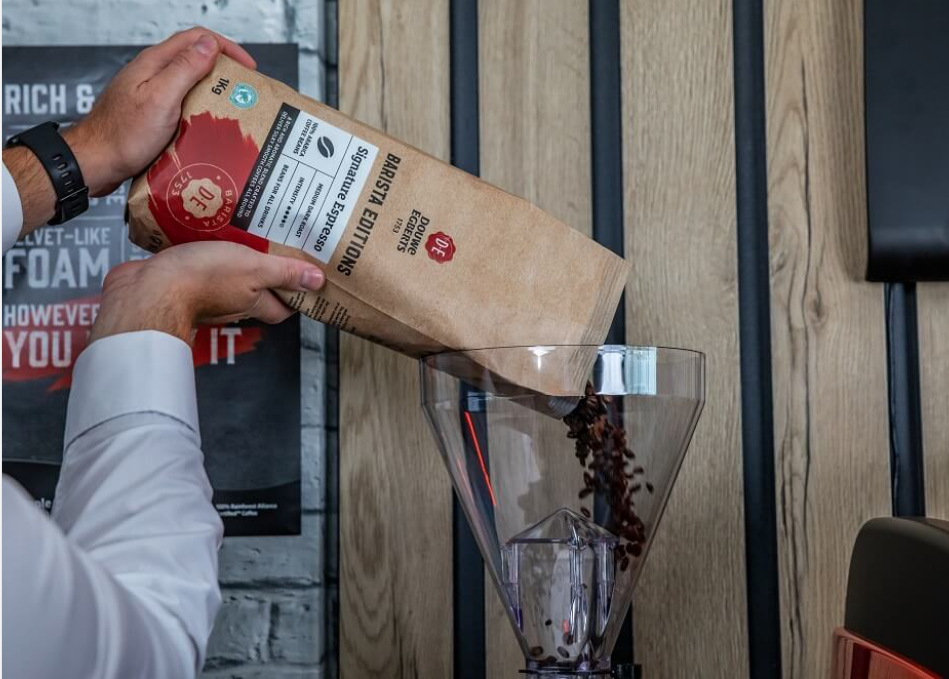
Barista Training: Operation Excellence
How to keep coffee fresh and in the best condition:
- Don’t overfill the coffee hopper, only fill to the amount you’ll use for the day
- Only grind coffee to order, this will give the best flavours
- Only open a fresh bag when required
- Store the coffee in its original packaging, somewhere cool and dry, avoiding sunlight
- Avoid storing next to a fridge, strong smelling food or close to steam/moisture sources
- Don’t leave beans in hopper overnight, transfer them to an airtight container